
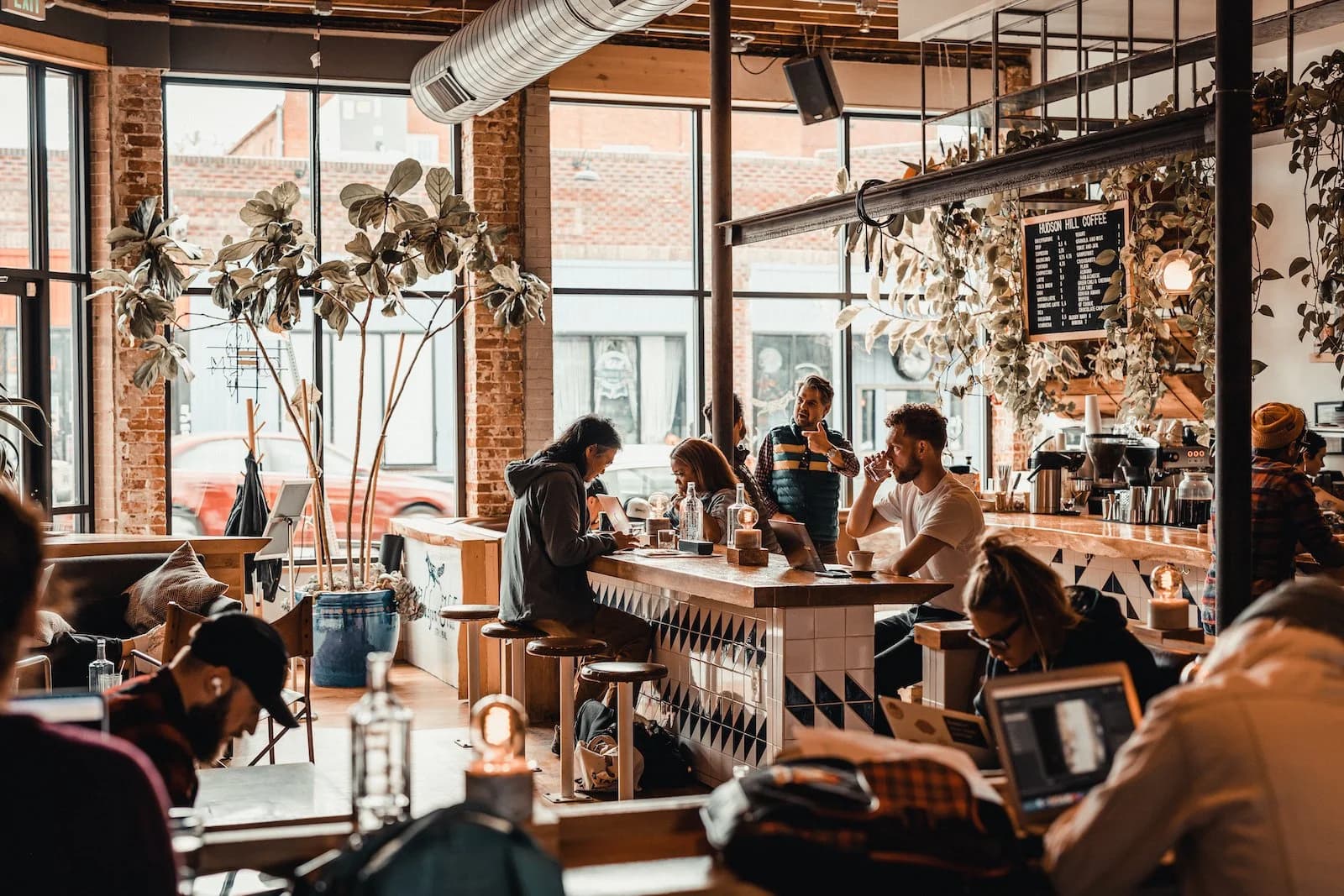
There’s something slightly strange about the way many modern environments feel today.
Not bad exactly. Just oddly demanding.
You can move through an airport, café, hotel, workspace or retail environment and spend half your time quietly negotiating with layers of digital infrastructure that are supposed to make life easier. Confirming something. Scanning something. Waiting for a prompt. Waiting.
None of it is individually difficult, but after a while you begin to notice how much mental energy modern environments consume simply to operate correctly inside them. A lot of environments today are still designed around operational efficiency first.
Faster throughput. Better optimisation.
From a business perspective this does make a lot of sense because those things do matter. But people don’t actually experience environments as operational diagrams. They experience them emotionally, spatially, psychologically. A room either feels comfortable to exist inside or it doesn’t.
You notice this particularly in hospitality because hospitality exposes behavioural truth very quickly. People naturally settle into spaces that feel intuitive. They avoid spaces that feel tense or over-engineered even if the environment itself is intelligently designed.
I think a lot of modern infrastructure still assumes technology should feel visible. That environments should constantly demonstrate their capability through interaction. This results in more screens, more prompts, more moments of the environment announcing itself, but I’m not convinced that’s what intelligence actually looks like at environmental scale.
The more advanced an environment becomes, the less attention it should probably require from the people moving through it. Not invisible exactly, just calmer, more aware of context, and more capable of understanding human behaviour without demanding continuous participation.
A genuinely intelligent environment would probably feel less technological, not more.